

This guide is compiled by yowin, a leading global aluminum building solution provider with 20+ years of production and export experience serving 20+ countries. Aluminum alloy thermal insulation windows are high-performance window systems widely used in residential, commercial and public buildings, solving pain points like high energy consumption, outdoor noise, rain leakage and poor wind resistance of traditional windows. Many engineers, procurement specialists and practitioners still have misconceptions about their principles, classification, applications and selection. This guide combines global project experience to explain their definition, working principles, types, applications, standards and misconceptions, helping you build a professional understanding of this product category.

Core Definition and Industry Positioning
Standard Definition: Per global building energy efficiency standards, aluminum alloy thermal insulation windows (thermal break aluminum windows) use polyamide or polyurethane barriers to separate inner and outer aluminum profiles, reducing indoor-outdoor heat transfer. They address limitations of traditional non-thermal-break aluminum, PVC and wooden windows.
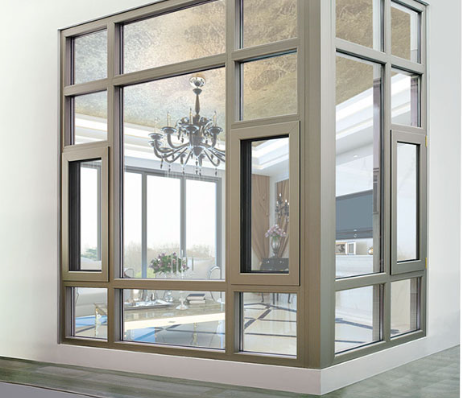
As a core green building component, their key advantages include: multi-cavity insulation structure cutting heating/cooling energy use by 30%+, 35-45 dB sound insulation blocking outdoor noise, and airtight sealing preventing rain and dust intrusion.
Comparison with Alternative Solutions
Indicator | Thermal Insulation Aluminum Windows | PVC Windows | Non-Thermal-Break Aluminum Windows |
|---|---|---|---|
U-value (W/(m²·K)) | 1.8-2.5 | 2.2-3.0 | 4.0-6.0 |
Sound Insulation (dB) | 35-45 | 25-32 | 20-28 |
Service Life (years) | 15-25 | 8-12 | 10-15 |
Data is verified from yowin's 20+ years of production and global project testing.
Working Principle
These windows work by breaking aluminum thermal bridges via insulation materials, and blocking heat/noise via insulating glass air layers. The core process includes: embedding polyamide barriers between aluminum profiles to cut heat conduction, using multi-cavity profiles to form internal air insulation layers, assembling double/triple insulating glass with dry air gaps, sealing gaps with EPDM strips, and pairing with durable hardware for long-term performance.
Main Types and Applications
Three mainstream types are available: casement windows (excellent sealing, ideal for high-rise/residential near busy roads), sliding windows (space-saving, suitable for balconies), and tilt-and-turn windows (flexible ventilation, ideal for high-end villas).
Key Performance Indicators
Core selection parameters include: U-value (lower = better insulation, choose per local climate), sound insulation (higher = better noise reduction, for properties near roads/airports), air tightness (higher = less air leakage, lower energy cost), and water tightness (higher = better rain resistance, for heavy rain areas).
Typical Application Scenarios
Widely used in three core sectors: residential housing (reduces energy use by 30%+, 15-25 year service life), commercial buildings (supports large panoramic windows, improves facade aesthetics), and public buildings (meets fire protection standards, low maintenance cost).
Standards and Compliance
Products must follow ISO 10077-2 (thermal performance testing), EN 12152 (air tightness) and EN 12154 (water tightness) standards. Key certifications include CE/RoHS/REACH for EU, FCC/cUL for North America, and KC/RCM/PSE for Asia-Pacific markets.
Common Misconceptions
1. Misconception: All aluminum windows have the same insulation. Truth: Only thermal break windows have good insulation; non-thermal-break types have high heat transfer. Advice: Verify U-value and thermal barrier material before purchase.
2. Misconception: Sliding windows have the same sealing as casement windows. Truth: Sliding windows rely on track friction, with lower sealing performance. Advice: Choose casement windows for high noise/rain areas.
3. Misconception: Thicker glass = better insulation. Truth: Insulation depends on air gap between glass layers, not thickness. Advice: Choose double glazing with 12-16mm air gaps.
FAQ
Q: What is the service life of aluminum alloy thermal insulation windows?
A: With proper maintenance, they last 15-25 years due to corrosion-resistant profiles and durable hardware.
Q: Can these windows be used in coastal areas?
A: Yes, fluorocarbon powder coating resists salt spray corrosion, making them suitable for coastal projects.
Q: Do these windows require regular maintenance?
A: No, powder-coated profiles need no annual painting, and hardware only needs occasional lubrication.
Contact Us
Company: Shandong Yaoyuan New Material Technology Co., Ltd.
Official Website: https://www.yaoyuancn.com/


